Introduction
Founders often ask "how much does an MVP cost" expecting a single number. The honest answer depends entirely on scope — but there are real patterns in what different budget tiers can realistically deliver, and what actually pushes a budget from one tier into the next.
The $10K Tier
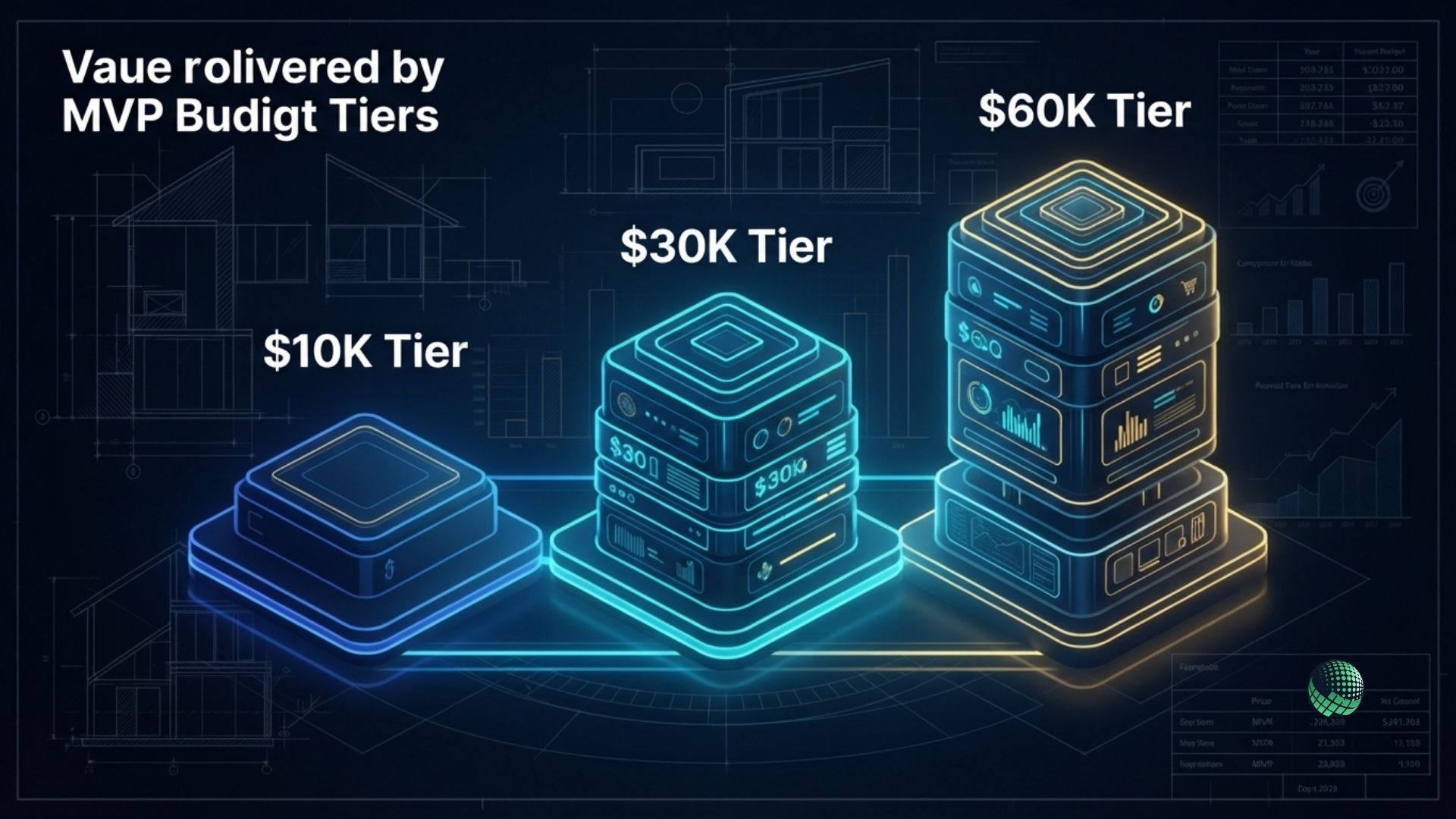
At this level, expect a tightly scoped single-platform product (web or mobile, not both), built on off-the-shelf infrastructure (Firebase, Supabase) rather than custom backend architecture. This tier works well for a single core user flow with basic auth and one primary feature — enough to validate a hypothesis, not to onboard thousands of users.
This is the right tier when the question you're testing is simple: "will anyone actually use this one feature?" It's not the right tier if you already know you need real backend infrastructure, multiple integrations, or a launch-ready product for investor due diligence.
The $30K Tier
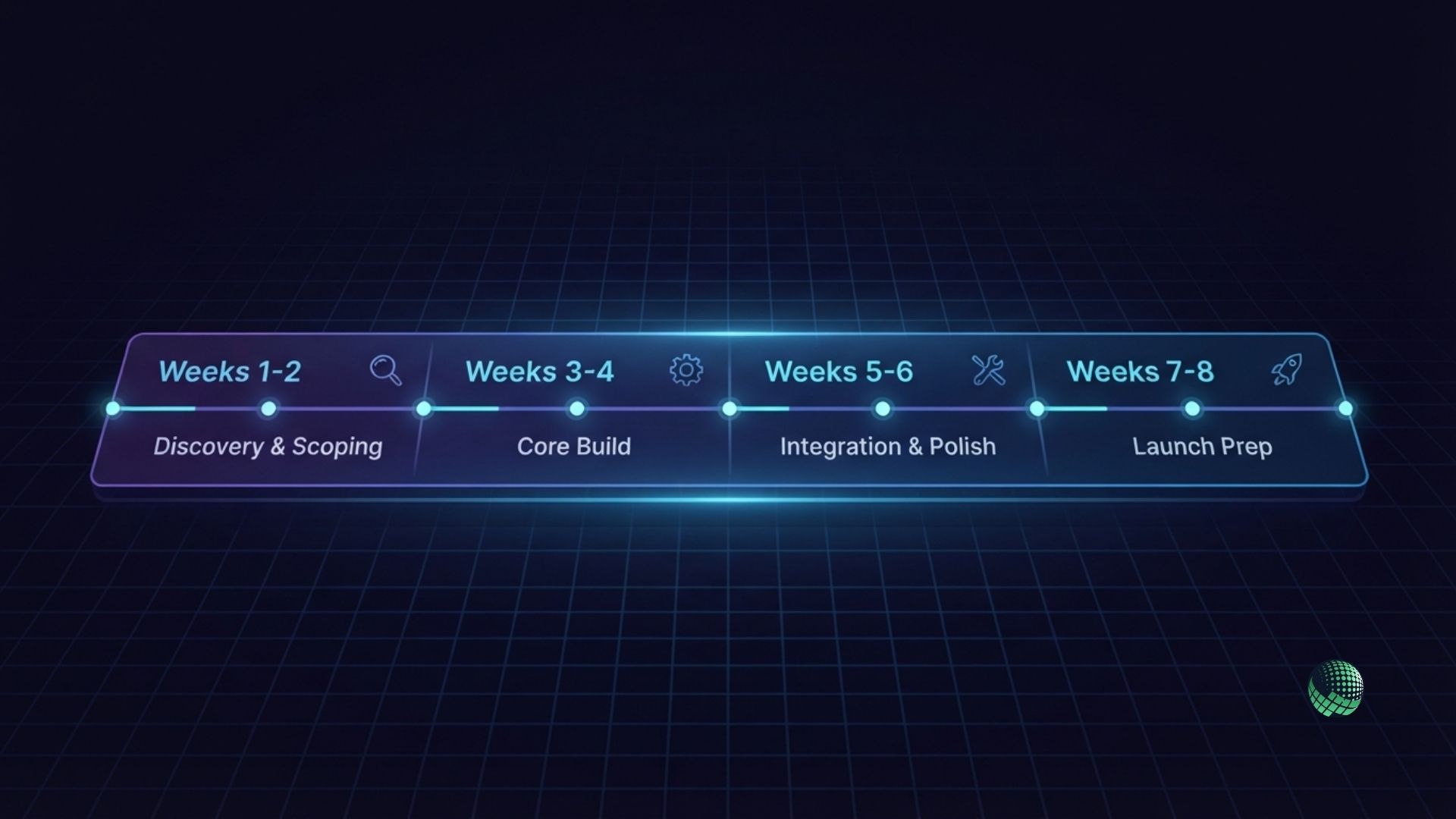
This range typically covers a custom backend, a properly designed database, and 2–3 core features working together, plus payment integration if the product needs it. This is the sweet spot for most seed-stage MVPs: enough scope to feel like a real product, still lean enough for a focused MVP development engagement to ship in 45–60 days.
Products like a social platform with real-time messaging and discovery, or an ecommerce MVP with live payments from day one, tend to land in this range — the scope calls for a real backend, but not yet the multi-tenancy or enterprise-grade architecture that pushes costs higher.
The $60K Tier
At this level, expect multi-platform support (web and mobile from one codebase, or truly native experiences), more sophisticated architecture (multi-tenancy, role-based permissions), and enough polish to support a soft public launch rather than just a closed beta.
Mobile-first enterprise products — think a field-operations app with real-time data and role-based access for pilot contracts — typically sit here, since enterprise buyers expect reliability and security posture a $10K or $30K build isn't scoped to deliver.
What Actually Drives Cost Up or Down
Five factors move a project between tiers more than any single feature decision:
- Platform scope. A single-platform MVP costs meaningfully less than building web and mobile at once. Most founders should validate on one platform first.
- Backend complexity. Off-the-shelf infrastructure (Firebase, Supabase) is faster and cheaper than a fully custom backend. Custom backend is worth the premium only when you already know the product needs to scale past MVP quickly.
- Number of core features. Every additional feature adds development time linearly. The fastest, cheapest builds validate one hypothesis, not five.
- Third-party integrations. Payments, auth providers, and unfamiliar external APIs each add integration and testing time, especially the ones your team hasn't worked with before.
- Design polish. A closed beta can launch with functional, unpolished UI. A public soft launch needs more design time to hold up to first impressions.
What Doesn't Scale With Budget
No budget tier buys certainty that the market wants the product — that's still validated through user behavior, not development spend. Bigger budgets buy more scope and polish, not a guarantee of product-market fit.
Conclusion
Budget should follow scope, not the other way around. Decide what needs to be true to validate your hypothesis first, then size the budget to that — not to an arbitrary number that sounds impressive.
Want a quick starting number for your own idea? Try our MVP budget calculator — answer 5 questions and get an instant budget and timeline range.
Frequently Asked Questions
What's a realistic minimum budget for an MVP?+
Around $10,000 can fund a tightly scoped single-platform MVP using off-the-shelf infrastructure, covering one core feature and basic authentication — enough to test a specific hypothesis, not to onboard thousands of users.
Does a bigger budget guarantee product-market fit?+
No. A larger budget buys more scope and polish, but whether the market actually wants the product is determined by user behavior after launch, not by how much was spent building it.
Should I decide budget or scope first?+
Scope first. Decide what needs to be true to validate your hypothesis, then size the budget to that scope — choosing an arbitrary budget number first often leads to either overbuilding or underscoping.
What's the single biggest thing that pushes an MVP budget higher?+
Backend complexity. A fully custom backend built to scale past MVP costs significantly more than off-the-shelf infrastructure like Firebase or Supabase — and it's usually the right call only if you already know the product needs to handle real scale soon after launch.
Should I budget for one platform or both web and mobile at once?+
One platform first, in almost every case. Validating on a single platform lets you test the core hypothesis for roughly a third of the cost of building web and mobile simultaneously, and you can add the second platform once you have real usage data to justify it.